UBO / EU · 5 min read
Four founders at 25% each. From July 2027, all four are UBOs.
The EU's new Anti-Money Laundering Regulation moves the ownership test from "more than 25%" to "25% or more". One word changes, and a new group of owners lands in your KYB checks.
By Onborly
Take a company with four founders who each own exactly 25%. Under the ownership test in today's EU directive, none of them is a beneficial owner through ownership, because none holds more than 25%. From 10 July 2027, all four are. Same company, same cap table, and four people your team now has to identify and verify.
The rule today
Today's framework is the EU's Anti-Money Laundering Directive. It treats "a shareholding of 25 % plus one share or an ownership interest of more than 25 %" as an indication of ownership (Directive (EU) 2015/849, Article 3(6) (opens in a new tab)). A directive has to be written into each country's law, and this one lets member states set a lower percentage, so the line can sit in a slightly different place from one country to the next.
What changes on 10 July 2027
The AMLR replaces this with one rule for the whole EU. An ownership interest becomes "direct or indirect ownership of 25 % or more of the shares or voting rights or other ownership interest" in the company, including rights to a share of profits (Regulation (EU) 2024/1624, Article 52 (opens in a new tab)). It's a regulation, so it applies directly in every member state from that date, with no national version in between (Article 90 (opens in a new tab)).
One thing stays the same: control. Anyone who controls the company by other means, for example through the right to appoint or remove most of the board or through relevant veto rights, is still a beneficial owner, whatever the size of their stake (Articles 51 (opens in a new tab) and 53 (opens in a new tab)).
How the new maths works
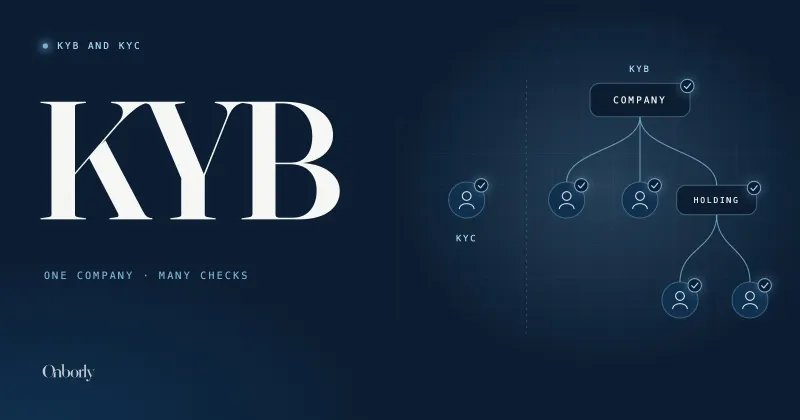
Stakes held through other companies are multiplied along each chain of ownership, and the results from different chains are added together (Article 52 (opens in a new tab)). Where ownership and control mix at different levels of a chain, Article 54 (opens in a new tab) has its own rule, so complex structures still need a careful read. A few examples:
| Structure | Stake under the AMLR | Beneficial owner through ownership? |
|---|---|---|
| Four founders, 25% each | 25% each | Yes, all four |
| Anna owns 50% of a holding company that owns 50% of your customer | 50% × 50% = 25% | Yes |
| Ben owns 40% of a holding company that owns 50% of your customer | 40% × 50% = 20% | No. Check whether he has control by other means |
| Carla owns 10% directly, plus 50% of a holding company that owns 30% | 10% + (50% × 30%) = 25% | Yes. The chains add up |
Four founders, 25% each
- Stake under the AMLR
- 25% each
- Beneficial owner through ownership?
- Yes, all four
Anna owns 50% of a holding company that owns 50% of your customer
- Stake under the AMLR
- 50% × 50% = 25%
- Beneficial owner through ownership?
- Yes
Ben owns 40% of a holding company that owns 50% of your customer
- Stake under the AMLR
- 40% × 50% = 20%
- Beneficial owner through ownership?
- No. Check whether he has control by other means
Carla owns 10% directly, plus 50% of a holding company that owns 30%
- Stake under the AMLR
- 10% + (50% × 30%) = 25%
- Beneficial owner through ownership?
- Yes. The chains add up
A lower number may follow
The AMLR leaves the door open to a lower threshold. Member states tell the European Commission which types of company they consider higher risk, and by 10 July 2029 the Commission has to assess whether a lower threshold is needed for them. If it is, the Commission sets it by delegated act: 15% at most, or higher if that's more proportionate, but always below 25% (Article 52(2) (opens in a new tab)).
Nothing changes on that front yet. It does tell you how to build: make the threshold a setting you can change for each type of customer.
What this means for your onboarding
Here's where we'd start:
- Update your ownership questions and declarations to ask for everyone holding 25% or more. Say explicitly that exactly 25% counts.
- Check how your KYB tool or vendor applies the threshold, and whether it multiplies stakes along each chain and adds the chains together.
- Keep asking about control. Board appointment rights, veto rights and nominee arrangements matter at any stake size.
- Find existing business customers with someone at exactly 25%, directly or through a chain, and agree with your MLRO how and when to bring those files up to date.
- Update your SOPs, reviewer checklists and training. The four founders make a good five-minute team briefing.
- Tell customers what's expected of them. From July 2027, companies set up in the EU must hold up-to-date beneficial ownership information and give it to you when you carry out customer due diligence (Article 63 (opens in a new tab)). Your document request can say so.
Key dates
- 19 June 2024: the AMLR is published in the EU's Official Journal.
- 10 July 2027: the AMLR applies, including the 25%-or-more test.
- 10 July 2029: deadline for the Commission's assessment of lower thresholds for higher-risk types of company.
A one-word change is easy to miss in a regulation this long. Right now it's a form update and a settings check. Leave it until 2027 and it becomes a remediation project.
Sources
- 01Regulation (EU) 2024/1624 (AMLR), Articles 51 to 54, 63 and 90. EUR-Lex. (opens in a new tab)
- 02Directive (EU) 2015/849 (Anti-Money Laundering Directive), Article 3(6). EUR-Lex. (opens in a new tab)
Last reviewed against these sources on .
General information about onboarding operations, not legal advice. How these rules apply to your firm is for your MLRO and legal advisers to decide.
Want your KYB flow ready for July 2027?
Request an Onborly Audit